

Zahnfüllung aus Keramik: Alles zu Keramikfüllung, Arten von Inlays, Kosten und Ablauf beim Zahnarzt
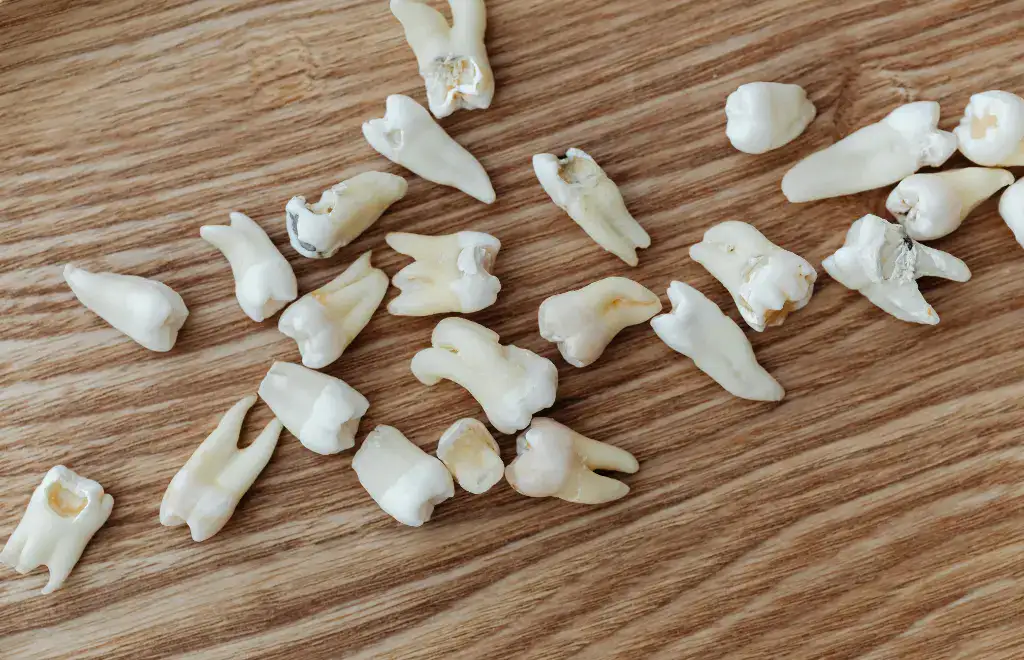
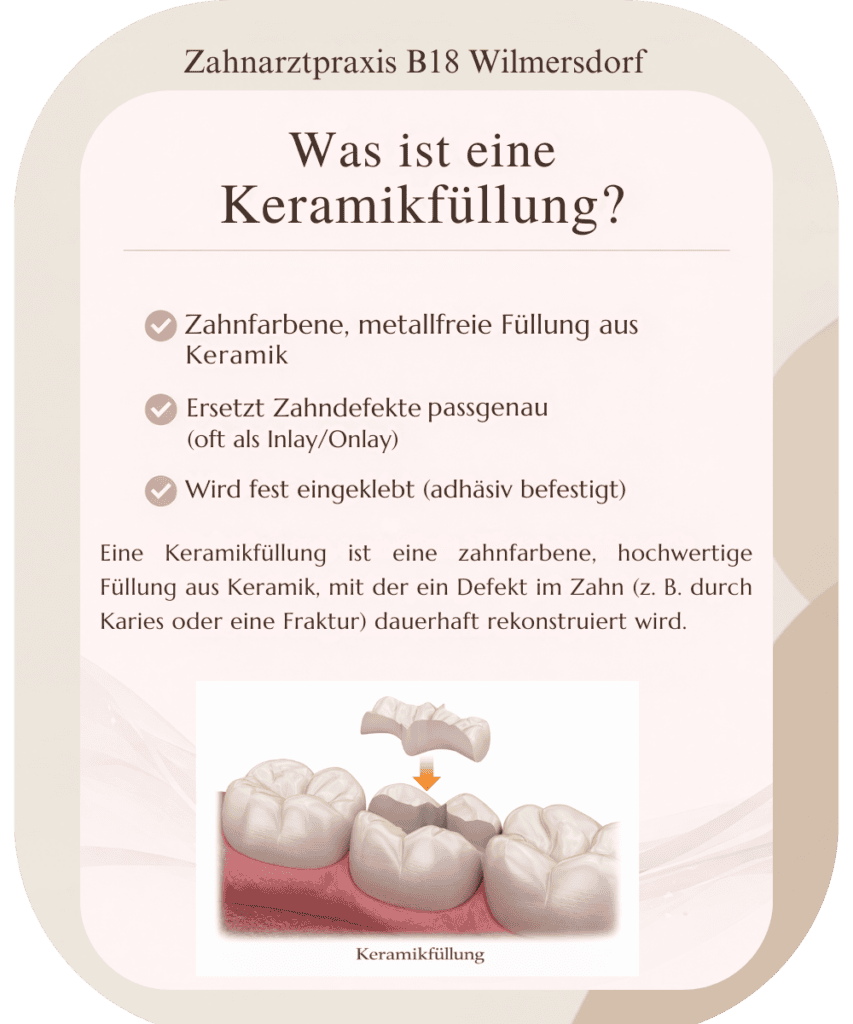
What is a ceramic filling (ceramic fillings / inlays) and how does it differ from a traditional filling?
One Ceramic filling is often an inlay or an insert filling. It is manufactured outside the mouth (usually in the laboratory) and then permanently bonded in. This distinguishes it from other fillings that are placed directly into the tooth by the dentist and then hardened.
Ceramics can blend harmoniously with their matching tooth color. Many consider this a clear advantage when Aesthetics and everyday safety.
Make your dream a reality. Schedule a consultation appointment at our dental practice B18 in Berlin-Wilmersdorf.
Which teeth are suitable for ceramic – and when is composite sufficient?
Ceramics are often sensible for larger defects in the posterior tooth area, especially in molars. Stability counts there – and a precisely fabricated inlay can support the tooth very well. For smaller defects, composite (tooth-colored plastic) is often sufficient, especially if a quick, single-session treatment is desired.
A brief examination usually quickly shows which type of dental filling is suitable for your tooth. Feel free to schedule an appointment at Dental Practice B18 – Dentist Wilmersdorf.
Why does a hole form in a tooth in the first place – and what happens at the dentist's?
Cavities, old fillings, and cracks: typical reasons why dental fillings need to be replaced.
A hole in a tooth usually occurs due to CariesCaries bacteria attack tooth structure, causing cavities that can extend into the dentin. Old fillings can also become leaky or break, in which case they should be replaced before new damage occurs to the tooth.
Typical tips:
- Toothache from cold/sweet
- Pain when chewing
- rough edge on a filling





Process in our practice: Examination, consultation, and selection of a suitable filling
Types of dental fillings compared: What dental fillings are there?
First, teeth and findings must be checked; anesthesia often follows for a comfortable treatment. The dentist identifies and, if necessary, removes any cavities or old materials. Afterward, the appropriate restoration is placed. For direct fillings, the filling material is placed layer by layer and then hardened.
When it comes to indirect fillings (e.g., inlays), an impression or scan is usually taken. The inlay is fabricated in a dental laboratory (sometimes using a milling machine) and later bonded into place. Dental Practice B18 – Dentist Wilmersdorf explains every step understandably.
There are different materials – and therefore different advantages and disadvantages. The distinction between „direct fillings“ and „indirect fillings“ is important.
Composite Fillings: Advantages, Limitations, and Typical Applications
Composite (Composite resin) is a modern plastic composite, often tooth-colored and adhesively bonded. Composite fillings harden with light and are very suitable for small to medium defects. Inlays can be more stable for larger cavities in the back teeth.
Amalgam: Why it's used less today and what the alternatives are
Amalgam is a metallic filling material and contains mercury. The use of mercury is more strongly regulated (EU Mercury Regulation), moreover, many disrupt the dark appearance. Amalgam fillings are therefore often replaced with composite or ceramic; gold fillings are also rarely an option (ceramic or gold / gold or ceramic - depending on preference and situation).
Glass Ionomer Cement: When it's suitable (e.g., temporary solution) and what it can't do
Glass ionomer cement is useful in certain cases, for example as a temporary solution or in Baby teeth. For molars that are heavily stressed, it is usually less durable than composite or ceramic.
Ceramic Inlays: Precision, Aesthetics, and Everyday Stability
Ceramic inlays are custom-made insert fillings that are often longer lastingare are. They look very aesthetic and can be a high-quality, stable solution for larger defects.
Table: Quick Comparison
| Option | Direct/indirect | Typically suitable for | Optics | Stability |
|---|---|---|---|---|
|
Plastic filling / Composite |
direct |
small–medium |
tooth-colored |
gut |
|
Ceramic inlays |
indirect |
medium–large |
very natural |
very good |
|
Amalgam fillings |
direct |
rather early standard |
dark |
gut |
|
Glass ionomer cement |
direct |
Transition/Baby teeth |
tooth-colored |
rather limited |
Make your dream a reality. Schedule a consultation appointment at our dental practice B18 in Berlin-Wilmersdorf.
Durability and Care: How Long Does a Ceramic Filling Really Last?
Durability Comparison: Ceramic Filling vs. Composite and Other Fillings
The durability depends on the size, location, and bite of the defect. Ceramic inlays are often more durable than many plastic fillings, especially under heavier load. Nevertheless, any filling may need to be replaced over time.
What influences lifespan: biting force, grinding, oral hygiene, and regular check-ups
- Teeth grinding increases the strain
- new cavities at the margins
- irregular checks
- very large defects (major damage)
If you grind, a splint can help protect the substance and fillings. Just contact us.
Costs, Subsidies, and Supplemental Dental Insurance: What Patients in Wilmersdorf Should Know
What the price depends on: size of the filling, inlays, laboratory effort, and material choice
Costs depend on size, material, effort, and whether a lab is involved. An inlay is made in a lab and requires more steps than direct fillings. Sometimes, a partial crown or full crown is more sensible than a large filling.
Dental insurance: What it often covers for ceramic fillings – and what to look out for
Whether health insurance covers ceramic fillings varies and often depends on the individual situation. It's often the case that health insurance companies tend to only cover the standard treatment, and ceramic is frequently considered additional performance seen. A Supplementary dental insurance can relieve here – depending on the tariff. We are happy to help with a cost plan.
If you want clarity, schedule a consultation at Dental Practice B18 – Dentist Wilmersdorf.
Decision support: Which filling is right for me – and how does B18 in Wilmersdorf support me?
„There is no “best dental filling" for everyone: Criteria by tooth, defect, and budget
The best dental filling depends on your tooth, whether it's a back or front tooth, the size of the defect, and your budget. The question of „ceramic or gold“ is also individual. The goal is always to preserve as much healthy tooth structure as possible and provide a stable restoration.
Next step: Consultation with the dentist – individual recommendation and treatment planning in Wilmersdorf
The Dental Practice B18 – Dentist Wilmersdorf Transparently advises you on fillings, inlays, materials, and costs. Book an appointment if you need a filling, want an old tooth filling replaced, or are simply seeking a second opinion.
FAQ about Ceramic Fillings
What is the advantage of ceramic over plastic?
Ceramics can be very aesthetic and are often durable, especially as inlays. Plastic/composite, however, can often be implemented more quickly and affordably.
How many appointments do I need for an inlay?
Mostly two: preparation with impression/scan and later placement.
Is the treatment painful?
With anesthesia, the treatment is usually well tolerated. Afterward, the tooth may be sensitive for a short time.
Does ceramic really last longer?
Often yes, especially with larger defects in the posterior tooth area. Care, control, and stress are crucial.
Can amalgam be simply replaced?
Yes, amalgam fillings can be replaced if they are defective or if you want a tooth-colored solution. We will discuss alternatives and the pros and cons.
Does the health insurance cover ceramic fillings?
Often only partially or not at all, because ceramics often go beyond standard care.
What is glass ionomer cement – and when does it make sense?
It is often used as a temporary solution or in special cases, e.g. with milk teeth. For heavily stressed molars, it is usually not the first choice.
What if I grind my teeth?
Teeth grinding can put a strain on fillings. A night guard can protect them and make the restoration last longer.
Source citation:
Dentist's Office B18 – Seher Sahin – Dentist Wilmersdorf
Karolina Grabowska © Pexels
Make your dream a reality. Schedule a consultation appointment at our dental practice B18 in Berlin-Wilmersdorf.


